Champagne's Leading Ladies: Past, Present and Future
There is a paradox at the heart of Champagne. For centuries, this most celebratory of drinks — poured at coronations, weddings, christenings, and victories — was shaped not by the powerful men whose names graced the labels, but by the women left behind when those men died. Widows, for the most part. Women thrust into businesses they had not planned to run, in an era when French law denied them the right to vote, to hold a bank account, or to move freely in society. And yet, from those circumstances of loss and limitation, they built empires.
Today, the story continues — not through widowhood, but through talent, determination, and a quiet revolution unfolding in cellars and boardrooms across the Champagne region. From the grandes maisons of Reims and Épernay to the independent growers of the Côte des Blancs, women are once again shaping the future of the world's most iconic sparkling wine.
The Age of the Widows: 19th Century Pioneers
To understand the role of women in Champagne, one must first understand a peculiarity of 19th-century French law. While married women were essentially invisible in the eyes of commerce — unable to own property, sign contracts, or manage finances independently — widows occupied a different legal category entirely. Upon the death of a husband, a widow inherited his rights. She could run a business, hold accounts, and make decisions. In a world that denied women almost every professional avenue, widowhood was, paradoxically, the key to independence.
It was through this narrow door that some of the most remarkable businesswomen in history stepped — and in doing so, transformed an entire industry.
Barbe-Nicole Ponsardin — Veuve Clicquot
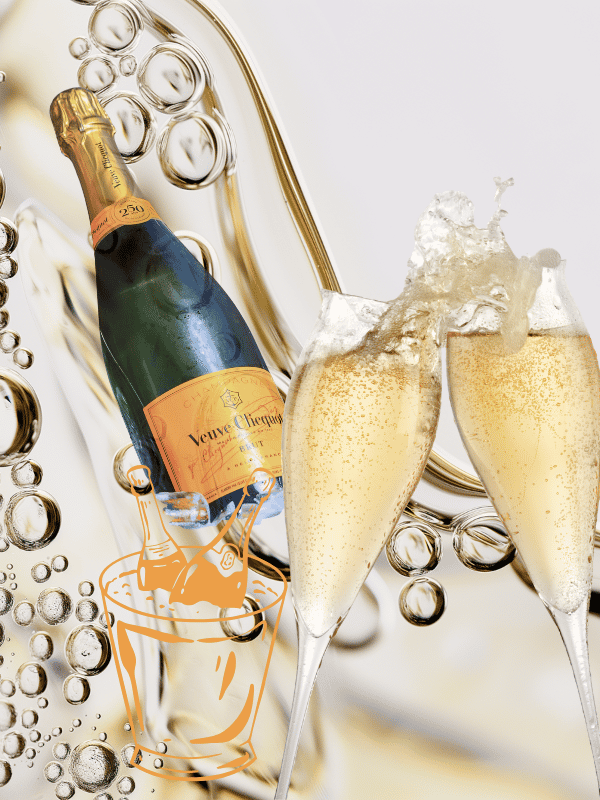
No story of women in Champagne begins anywhere other than with Barbe-Nicole Ponsardin. Born in 1777, she married François Clicquot in 1798. The couple had begun to develop the wine side of the Clicquot family business, but it was still a modest operation when François died suddenly in 1805, leaving his twenty-seven-year-old wife with a six-year-old daughter and a fledgling winery.
The timing could hardly have been worse. Napoleon's wars had closed trading routes, blockaded ports, and devastated international markets. Her father-in-law, Philippe Clicquot, the house's founder, was so shaken by his son's death that he considered selling the company entirely. Instead, Barbe-Nicole convinced him to back her. What followed was one of the most extraordinary business careers in French history.
She began with a brilliant commercial move: ensuring that her champagne was the first to reach Russia when ports reopened after the Napoleonic Wars. She smuggled 10,000 bottles into St Petersburg in 1814, capturing the Russian imperial market before any competitor could act. Tsar Alexander I declared the 1811 vintage the only champagne he would drink, and Veuve Clicquot became the byword for luxury across the Russian court.
But her technical contributions were equally transformative. The process of riddling — the methodical turning and tilting of bottles to consolidate yeast sediment at the neck for easy removal — is attributed to Madame Clicquot, who developed the system using a modified kitchen table around 1816. Known as remuage, this technique solved one of champagne's central production challenges and is still used in the traditional method today. She also pioneered the blending of red and white wines to create rosé champagne in 1818, a technique that remains standard.
By the time of her death in 1866, Veuve Clicquot was one of only a handful of champagne brands known worldwide. Her personal motto — "Only one quality: the finest" — became the company's creed. She is, without question, la Grande Dame de la Champagne.
Louise Pommery
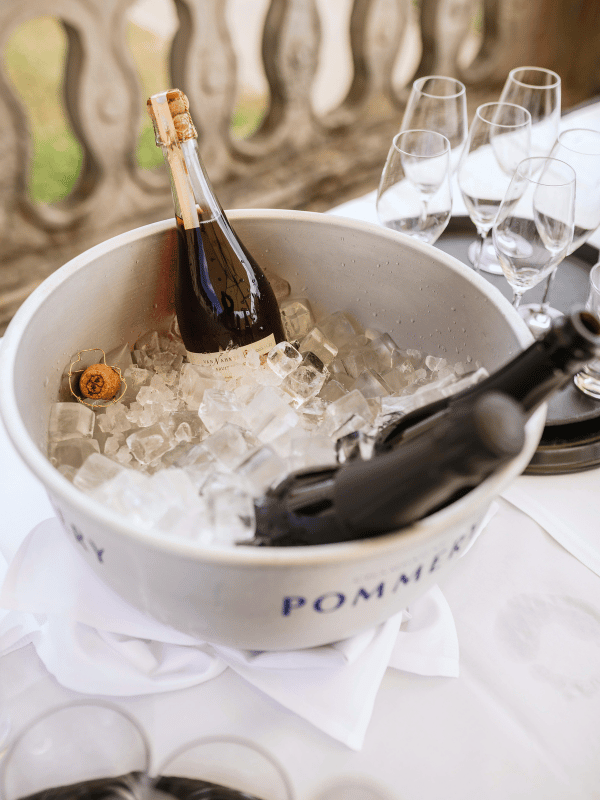
Where Madame Clicquot inherited a small but functioning wine business, Louise Pommery inherited something altogether different. When her husband Alexandre-Louis Pommery died in 1858, she found herself in charge of a modest wool trading company that had only recently added champagne as a sideline. She was thirty-nine years old, with no experience in wine.
What she did next was audacious. She pivoted the business entirely to champagne, abandoned the sweet, heavy styles that dominated the market, and set her sights on Britain, where she had noticed a growing appetite for drier wines. In 1874, she launched Pommery Brut Nature — the world's first commercially produced dry champagne — upending centuries of convention and creating the style that dominates the market to this day.
She also thought on an extraordinary scale. In 1868, she broke ground on a vast new complex in Reims, a 124-acre development built over ancient Roman chalk pits that would become Pommery's celebrated crayères — the famous chalk cellars that are now a UNESCO World Heritage Site. The champagne world was sceptical. Bankers doubted her. Competitors scoffed. She responded by purchasing a masterwork by Jean-François Millet and donating it to the Louvre — a very deliberate statement about the power of her purse.
Her prestige cuvée, Cuvée Louise, bears her name in perpetual tribute.
Lily Bollinger
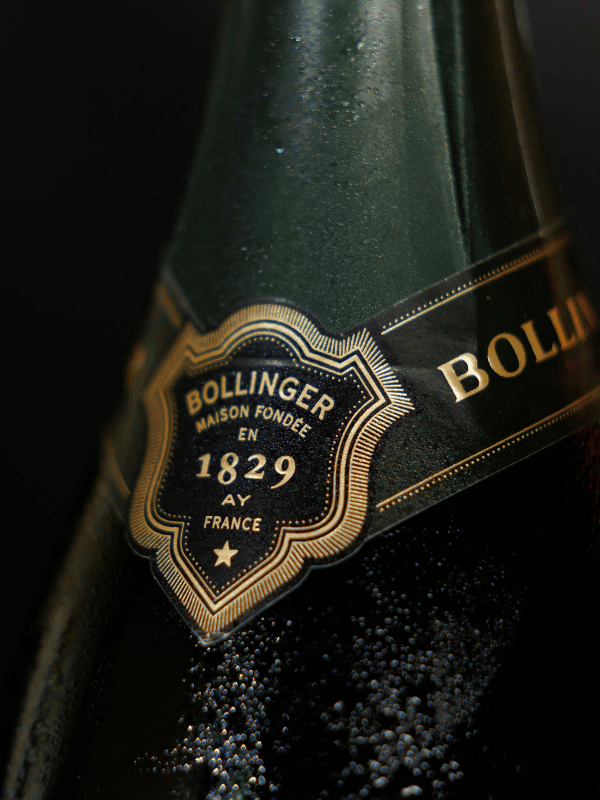
Elizabeth Bollinger, known to all as Lily, came to lead Champagne Bollinger in 1941 following the death of her husband Jacques. What set her apart from her predecessors was not so much a single technical innovation, but rather the force of her personality and the breadth of her vision for the house.
In a period of devastation — the Second World War had ravaged the Champagne region — Lily not only kept the house alive but earned the deep affection of her local community for her efforts to protect and support the people of Aÿ. She was frequently photographed cycling through the vineyards, a figure of determination and warmth in a time of hardship.
As the world recovered, Lily launched Bollinger's marketing campaign in New York in 1951, personally travelling to America to build the brand's international profile. She purchased additional vineyards to strengthen the estate, pioneered a rudimentary sorting table to ensure only the finest grapes were used, and created the concept of Récemment Dégorgé (R.D.) — a late-disgorged champagne that allowed collectors to enjoy wines with exceptional cellaring potential. She also launched Bollinger's first vintage rosé.
She remained at the helm until 1971. Her legacy lives on not just in the wines, but in a quote that has become one of the most celebrated in all of champagne lore:
"I drink it when I am happy and when I am sad. Sometimes I drink it when I am alone. When I have company I consider it obligatory."
Mathilde-Émilie Perrier — Laurent-Perrier
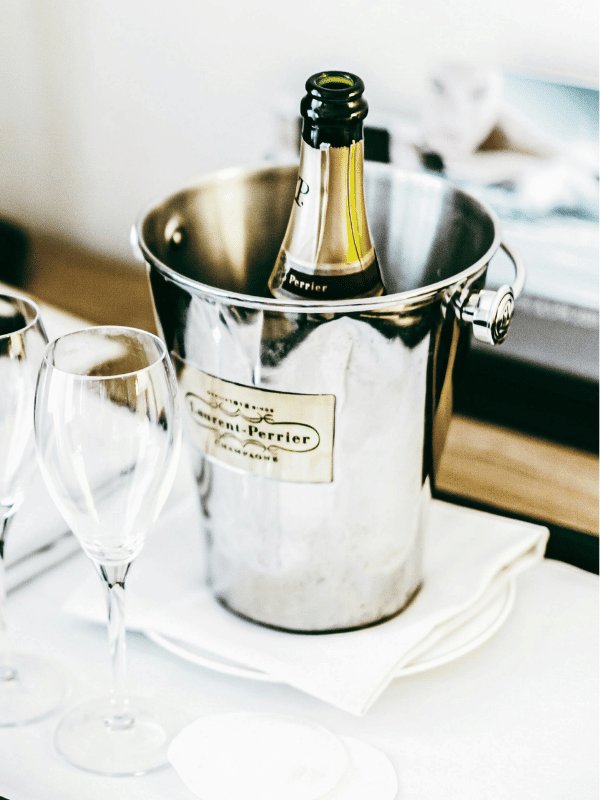
The history of Laurent-Perrier is, in many ways, a story of women passing the torch across generations. When Eugène Laurent died in a cellar accident in 1887, his widow Mathilde-Émilie Perrier took over the house and gave it a new name: Veuve Laurent-Perrier. She was a woman of pioneering instinct. In 1889, she launched the Grand Vin Sans Sucre — a sugar-free champagne that anticipated by nearly a century the modern taste for low-dosage and zero-dosage styles. The house flourished under her leadership until her death in 1925.
When the house eventually faltered during the economic chaos of the 1930s, it was another woman — Marie-Louise de Nonancourt — who stepped in to purchase it in 1939, determined to secure a future for her sons. It is thanks to her act of faith that Laurent-Perrier exists as one of the great champagne houses it is today.
Camille Olry-Roederer
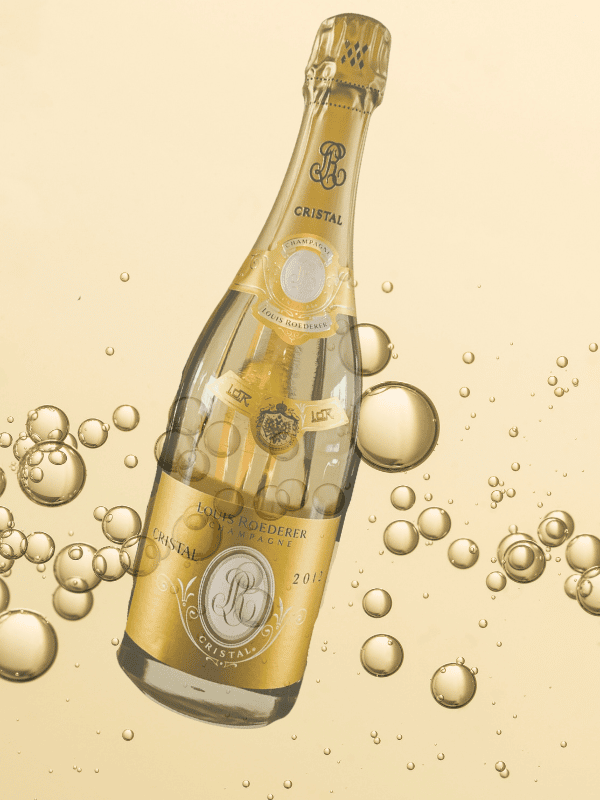
Camille Olry-Roederer is perhaps the least celebrated of the great champagne widows, but her achievement was no less remarkable. When her husband Léon died in 1932, she inherited a Roederer house teetering on the edge of bankruptcy. The Russian Revolution had wiped out what had been the house's single largest market — Russia had once accounted for a third of all Roederer production — and the Great Depression had devastated what remained.
Camille not only steered the house through this crisis, but through the trials of the Second World War, repositioning Roederer as a luxury house and strategically acquiring Grand Cru and Premier Cru vineyard plots that would underpin the house's quality for generations. She ran the house until the 1970s, when she passed the keys to her grandson. Today, Louis Roederer — home to the iconic Cristal — remains one of the most admired independent champagne houses in the world, and it is in no small part her legacy.
The Women Who Kept the Lights On: Two World Wars
Beyond the grandes dames who transformed their houses, there is another chapter of women's history in Champagne that is less told but no less important. During both World War One and World War Two, as men left for the front, it was women who kept the vineyards tended, the cellars running, and the houses alive. They managed harvests under shellfire, negotiated with occupying forces, and made business decisions that their husbands had never anticipated leaving to them.
Lily Bollinger is perhaps the most famous example, but she was far from alone. Across the region, women stepped into roles that the industry had never imagined for them, and many never stepped back out.
Leading Houses, Female Founders
It is worth pausing to note that several of the great champagne houses were not merely saved by women — they were founded by them, or founded with them at the centre.
Champagne Henriot, established in 1808, was founded by Apolline Godinot Henriot, making it one of the very few grandes maisons whose origins are directly tied to a woman's vision. The house's decision in 2020 to appoint a female Chef de Cave — Alice Tétienne — was described by the family as a story of "coming full circle."
Champagne Duval-Leroy, meanwhile, tells a more modern story of widowhood. When Carol Duval-Leroy's husband died in 1991 at the age of thirty-nine, she took over the house, named its prestige cuvée Femme de Champagne, and went on to become the first and, to date, only woman to be appointed President of the Association Viticole Champenoise. Under her leadership, Duval-Leroy became the first champagne house to receive ISO 9002 certification for quality management, and the first to produce a certified organic Brut Champagne.
The Cellar Masters: Architects of the Blend
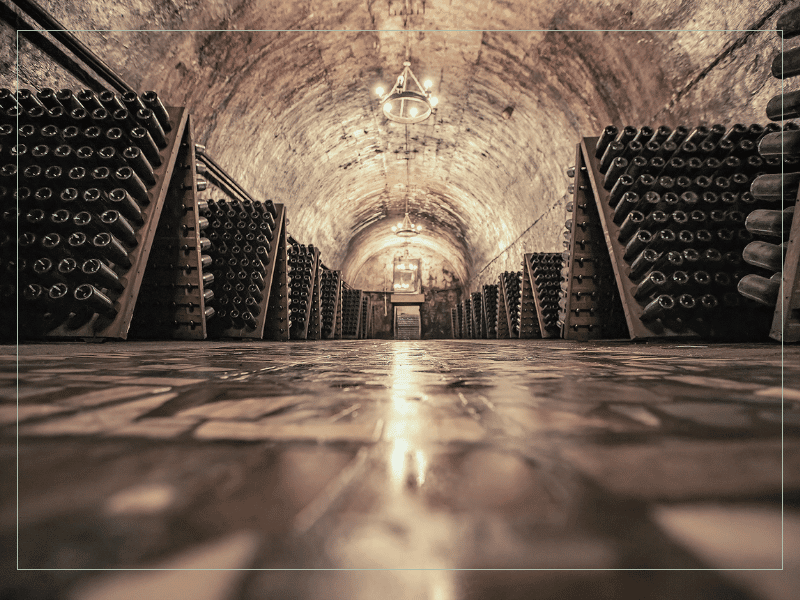
Before introducing the remarkable women who hold the title today, it is worth explaining what a Chef de Cave — or cellar master — actually does, because it is perhaps the most technically demanding and creatively exacting role in all of champagne.
The Chef de Cave is the architect of the house's style. Their primary responsibility is the annual assemblage — the blending of dozens, sometimes hundreds, of base wines from different grape varieties, different villages, and different years into a single coherent champagne. They must have an exceptional sensory memory, able to recall how a wine tasted three years ago and project how it will taste in five. They manage the entire winemaking process, from the pressing of the grapes to the final dosage that determines the champagne's level of sweetness. They are the guardian of the house's identity, year after year, harvest after harvest.
It is a role that, until very recently, was almost exclusively held by men. That is now changing — rapidly and visibly.
When Sandrine Logette-Jardin was appointed Chef de Cave at Duval-Leroy in 2005, she was the first woman ever to hold that title in the Champagne region. When she started her career, she has recalled, women were not even permitted to enter the cellars. Within a decade and a half of her appointment, the landscape had shifted dramatically.
Today, an impressive and growing number of champagne houses are led in the cellar by women:
Canard-Duchêne — Cynthia Fossier
Castelnau(cooperative) — Carine Bailleul
Chanoine Frères — Isabelle Tellier
De Venoge — Isabelle Tellier
Deutz — Caroline Latrive
Duval-Leroy — Sandrine Logette-Jardin
Esterlin — Gabrielle Malagu
Gardet — Stéphanie Sucheyre
Henriot — Alice Tétienne
Joseph Perrier — Nathalie Laplaige
Krug — Julie Cavil
Marie Stuart — Isabelle Mary
Perrier-Jouët — Séverine Frerson
Ruinart — Caroline Fiot