Rooted in Champagne: The Grape Varieties That Define a Legend

 
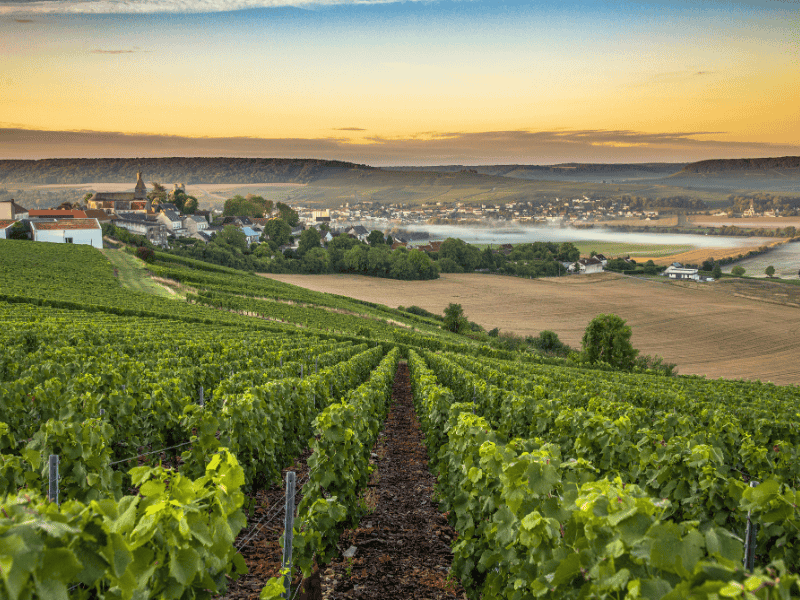
Vineyards at sunset in champagne, France

The Grapes of Champagne: A Story Written in Chalk and Time

April in the vineyards of Champagne is a month of quiet miracles. Buds have broken, the first tender leaves are unfurling along rows that stretch across hillsides unchanged for centuries. It is the perfect moment to pause and ask a question that every glass of Champagne quietly poses: where does all of this begin?


The answer reaches further back than most imagine.

While fossilised vine leaves have been found near Sézanne — silent witnesses from a prehistoric era — the vitis vinifera from which today’s Champagne grapes descend arrived considerably later, most likely spreading northward from Burgundy and the Moselle valley towards the close of the third century AD. The Remi, a Gaulish tribe who called this land home long before the Romans arrived, were already passionate wine lovers — though they had to import it. Vine cultivation was initially forbidden to the Gauls to protect Roman trade, a ban that was only lifted in the late 3rd century, opening the door to what would become one of the world’s most celebrated wine regions.

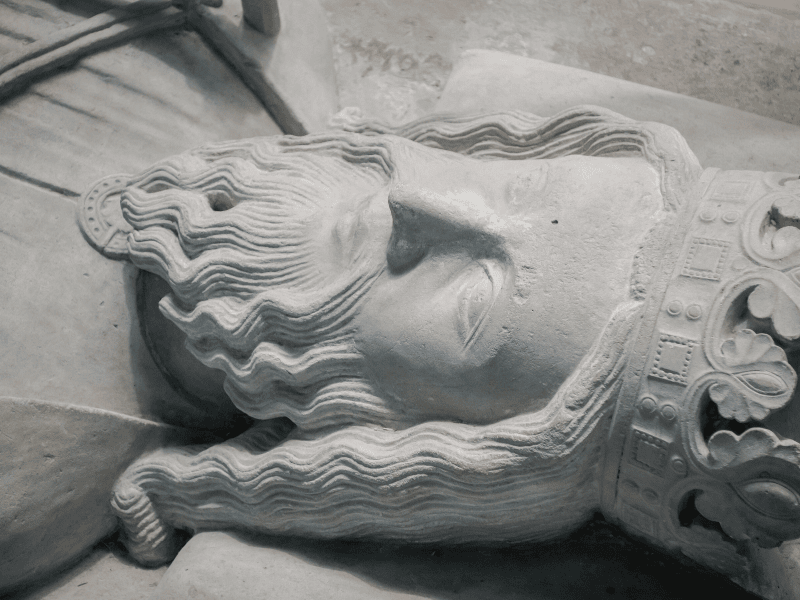
Clovis, King of the Franks

It was the Church that first truly cultivated this potential. In the 6th century, Saint Remigius, Bishop of Reims — the very man who baptised Clovis, King of the Franks — made mention of vines in his testament, and in the centuries that followed, abbeys and archbishops became the region’s most devoted vignerons. They refined the cultivation methods, deepened the knowledge, and laid the foundations of a viticultural tradition that would endure for millennia. When the Kings of France began their coronations at Reims Cathedral, the wines of Champagne were already present at the table — earning them the timeless title: the wine of Kings, and the King of wines.

 
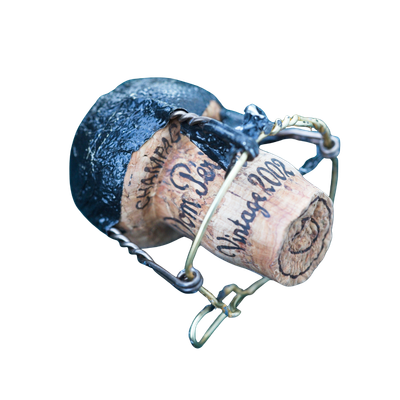
Champagne Cork

The path to the wine we know today was long, unhurried, and shaped by both human ambition and natural circumstance. It was not until the late 17th century that sparkling Champagne began to take deliberate form — when pioneers like Dom Pérignon at Hautvillers Abbey revolutionised the art of blending, and when stronger glass bottles and cork stoppers made it possible to capture the wine’s delicate effervescence rather than lose it. By the 1690s, “Champagne wines” were named as such for the first time, a wine bound to a place as much as a method.

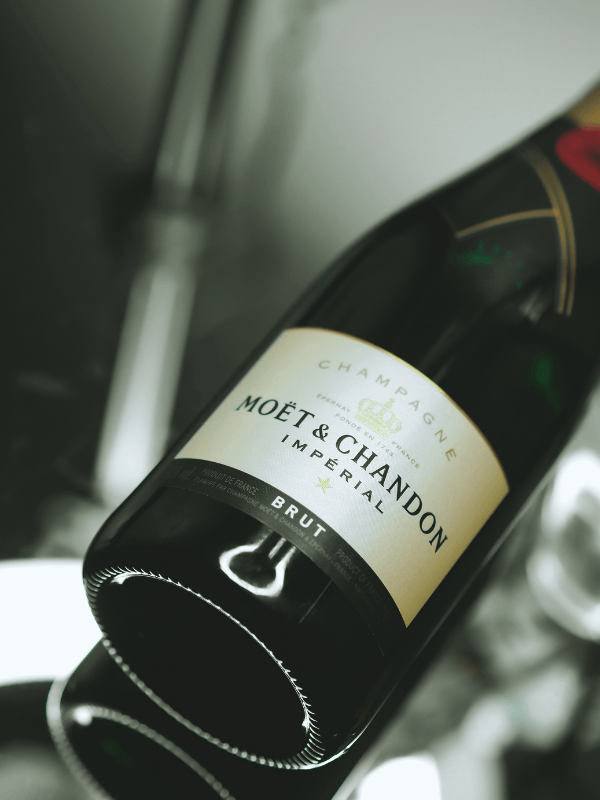
Bottle of Champagne

The great Houses followed in the 18th century — Ruinart, Moët, Veuve Clicquot among them — refining, innovating, and building the global prestige that endures to this day. Even the devastation of the phylloxera crisis in the late 19th century, which wiped out vast swaths of the region’s vineyards, became a turning point rather than an ending: growers and Houses united, grafted their vines onto resistant American rootstock, and rebuilt. Out of crisis came cohesion, and out of cohesion came the protected AOC designation formalised in 1936 — a legal recognition that Champagne is, and can only ever be, from here.

It is a story of extraordinary continuity. The same chalk that stored ancient seas beneath these hills now feeds the roots of the vines you see from the windows of Maison Vejoll. The same devotion that drove medieval monks to tend their parcels with care now guides the hands of the vignerons working the slopes outside. And the same three grape varieties that emerged from centuries of observation and refinement — Chardonnay, Pinot Noir, and Meunier — remain at the heart of every bottle.

Which brings us to April, and to the vines themselves.

The Three Main Grape Varieties

Three grapes. One wine. An infinite world of expression.

It is one of the great quiet marvels of the wine world — that a single appellation, governed by strict tradition and bounded by precise geography, has built its entire identity around just three principal varieties. Not by accident or convention, but through centuries of patient observation, failure, refinement, and ultimately, mastery. Chardonnay, Pinot Noir, and Meunier are not simply the grapes of Champagne. They are its language, its architecture, its voice.

Each brings something irreplaceable to the blend. Each has found, across generations of cultivation, the precise landscape where it speaks most clearly. And each, when you walk the vineyards of Champagne in April — as the first green leaves unfurl and the hillsides stir back to life — reveals itself not merely as an agricultural choice, but as a profound expression of place.

 
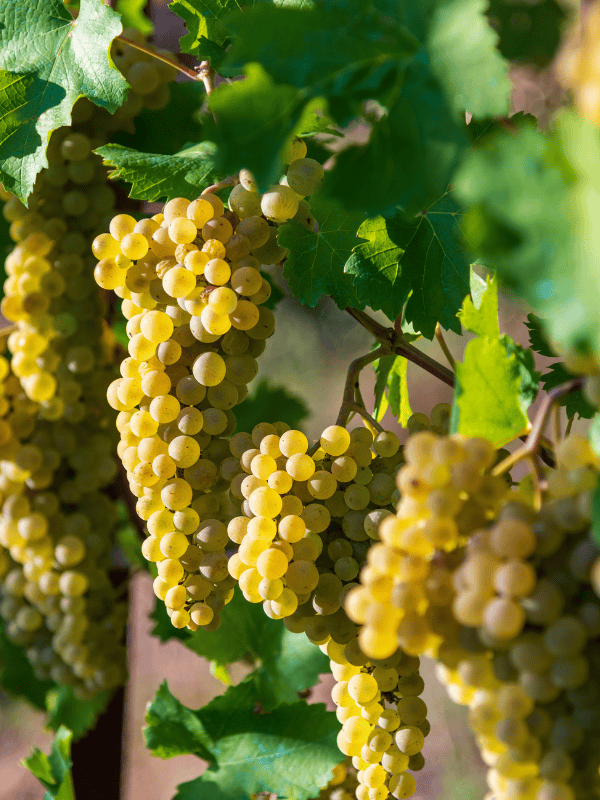
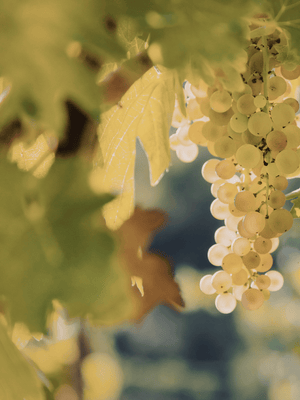
Chardonnay Grapes
 
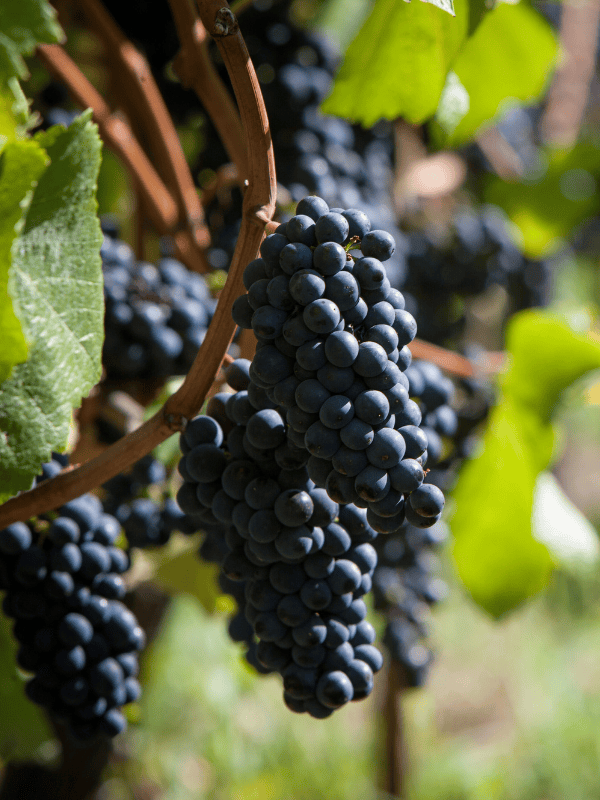
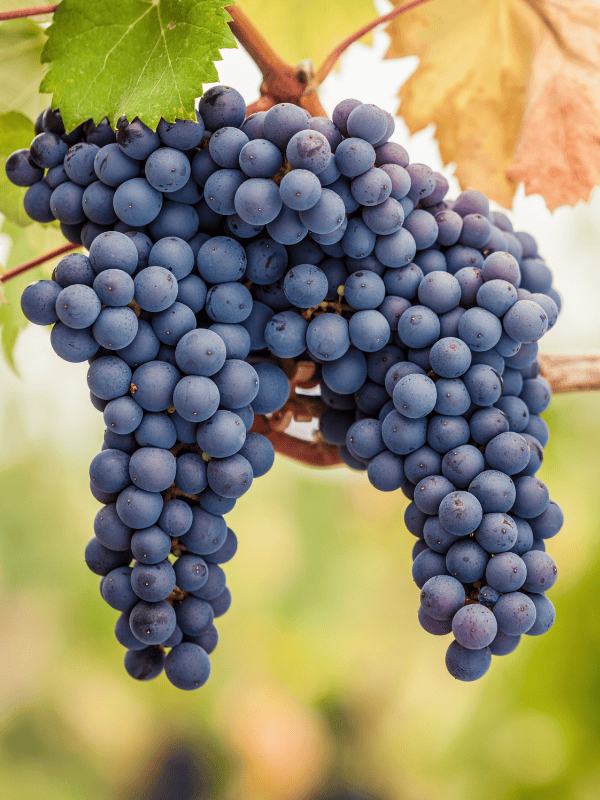
Pinot Noir Grapes
 
Grapes blurry backgound
 

Chardonnay — The Voice of Chalk and Light

Of all the grape varieties permitted in Champagne, Chardonnay is perhaps the most eloquent. It is a white grape of extraordinary sensitivity, capable of translating the subtleties of its terroir with a precision that few other varieties can match. In the glass, it brings freshness and finesse — delicate floral aromas, bright citrus, a characteristic minerality that seems to carry the memory of the chalk beneath it. In warmer years, it reaches toward riper, more tropical notes of pineapple and guava; in cooler ones, it retreats to lemon, green apple, and a crystalline purity that can take your breath away. Given time and patience, it develops the toasty, honeyed complexity that makes aged Blanc de Blancs among the most profound wines on earth.

Chardonnay accounts for around 31% of Champagne’s vineyard area, and it has found its spiritual home in the Côte des Blancs — a name that declares its allegiance plainly. Stretching from the north-east of the wine-growing area to the south-west, at right angles to the Marne Valley, this region is defined by south and south-east facing slopes of almost pure chalk. Chardonnay accounts for a remarkable 96% of plantings here, and the grand cru villages of Le Mesnil-sur-Oger, Cramant, Avize, Chouilly, and Oger have become synonymous with some of the most precise and age-worthy expressions in the appellation. It also finds a second home further south in the Côte de Sézanne, where it tends toward blending rather than single-varietal cuvées, contributing elegance and freshness to the broader assemblage.

What Chardonnay contributes to the blend is not simply flavour, but structure — a long, linear backbone and an exceptional ability to age, making it the variety most associated with prestige cuvées and vintage Champagnes destined for decades of cellaring.


Pinot Noir — The Heart of Champagne

If Chardonnay is the mind of Champagne, then Pinot Noir is undeniably its heart. This is the most widely planted variety in the appellation, covering 38% of the vineyard area, and it brings to the blend everything that Chardonnay does not — body, depth, structure, and a generous warmth that grounds the wine’s soaring acidity. Its aromas are those of the forest and the hedgerow: red cherries, wild strawberries, cranberries, and the delicate perfume of roses and violets. It endows Champagne with richness and presence, a tactile fullness on the palate that transforms effervescence into something genuinely substantial.

Pinot Noir is a black-skinned grape, which gives rise to one of Champagne’s most quietly fascinating realities — that most of the wine it produces is white. The juice of even a black grape is clear; colour only develops through contact with the skins, and Champagne’s centuries-old pressing techniques have been refined precisely to extract that juice as swiftly and purely as possible. When winemakers do allow some skin contact, or blend in a measure of still red wine, the result is rosé Champagne — one of the region’s most joyful expressions.

Pinot Noir’s most celebrated territories are the Montagne de Reims and the Côte des Bar. The Montagne de Reims is a landscape of remarkable character — a broad headland flanked by the Vesle river to the north and the Marne to the south, its higher ground carpeted with dense woodland and thickets, its lower slopes given over to some of Champagne’s most revered vineyards. The grand cru villages of Verzenay, Bouzy, and Ambonnay sit on the most southerly hillsides of this arc, catching the light at angles that coax Pinot Noir to its most expressive.

Further south, the Côte des Bar — lying at the southernmost edge of the appellation, south-east of Troyes and bordering Burgundy — is Pinot Noir country of a younger, bolder character. Vines were only planted extensively here from the 1980s, and while there are no grand cru sites, the villages of Celles-sur-Ource, Urville, and Les Riceys produce wines of distinction and increasing recognition.
 

Meunier — The Generous Heart of the Marne

For too long, Meunier occupied a somewhat underestimated place in the Champagne hierarchy — a workhorse variety, valued for reliability rather than refinement, destined primarily for non-vintage blends and rarely celebrated in its own right. That perception has shifted considerably in recent years, and rightly so. Meunier, at 31% of Champagne’s plantings, is not merely a supporting actor. It is a vital and distinctive voice — one that brings immediacy, generous fruitiness, and a round, approachable charm that makes Champagne accessible and joyful from the moment it is poured.

Its name is evocative: meunier means flour miller in French, a reference to the powdery white dust that coats its leaves and buds in early spring — a sight that feels entirely at home in April, when the vineyards begin their annual unfurling. It is the most frost-resistant of the three main varieties, budding later and therefore offering a natural resilience to the late frosts that can devastate Champagne’s vineyards in precisely this season. This hardiness has made it the dominant grape of the Marne Valley, where its preferred soils of clay and sand align perfectly with cooler, more challenging sites.

The Marne Valley vineyards are a world unto themselves — steep hillsides mostly planted on either side of the river, stretching westward toward Paris for as far as the eye can see. It is a dramatic, elongated landscape of clinging vines and dramatic inclines, quite different in character to the rounded hillsides of the Montagne de Reims or the orderly white slopes of the Côte des Blancs. In the eastern reaches of the valley, Pinot Noir’s presence grows stronger, and the south-facing grand cru village of Aÿ — one of Champagne’s most historically significant — stands as testament to the valley’s ability to produce wines of genuine greatness.

In the blend, Meunier provides what neither Chardonnay nor Pinot Noir can quite deliver alone: softness, early drinkability, and a ripe, expressive fruitiness — yellow plums, pear, and a distinctive warmth — that makes a glass of Champagne feel immediately welcoming.


The Forgotten Four

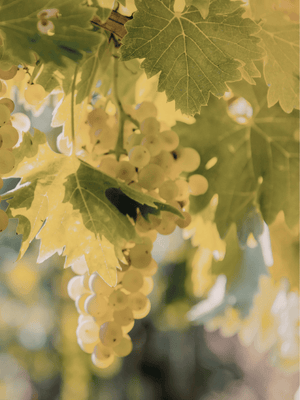
Sunlit Grapes

Beyond the celebrated trio, Champagne’s appellation permits four additional varieties — Arbane, Petit Meslier, Pinot Gris, and Pinot Blanc — that together account for a mere 0.3% of the region’s vineyard area. They are, in the truest sense, the quiet survivors of another age.

These are ancient varieties, older than the winemaking traditions that eventually sidelined them, once widely cultivated across the region before the drive for consistency and quality in the late 19th century gradually concentrated Champagne’s identity around its three principal grapes. For much of the 20th century they languished at the margins, too unpredictable and low-yielding for mainstream production. Yet they never entirely disappeared — kept alive by a handful of devoted growers who recognised in their idiosyncrasies not weakness, but character.

Arbane ripens late and resists the cellar’s demands with a certain obstinacy, but rewards patience with a Champagne of exceptional delicacy — hawthorn blossom, carnation, vine peach, and quince — a wine of almost otherworldly finesse. Petit Meslier produces tiny clusters of equally tiny grapes, fiercely susceptible to disease and wildly low-yielding, yet capable of bestowing a smoky, lingering complexity and vivid citrus energy quite unlike anything the three main varieties can achieve. Pinot Gris — known affectionately in Champagne as Enfumé, meaning filled with smoke — is a close cousin of Pinot Noir that brings nutty, deeply smoky notes and an almost meditatively low acidity. Pinot Blanc, the most consistent of the four, offers a robust, full-bodied freshness and matures faster than Pinot Noir, making it a quietly reliable presence in the blends that include it.

Sunlit Grapes

Over the past two decades, these ancestral grapes have quietly staged something of a renaissance, with plantings growing by 45 hectares as a new generation of grower-producers rediscovers their potential. They remain rare and celebrated, appearing in a handful of exceptional cuvées — most notably among the pioneering spirits of the grower Champagne movement, who see in them not relics of the past but seeds of the future.


The Vine Outside Your Window

There is something quietly profound about understanding the grapes behind the wine in your glass, particularly when those grapes are growing within sight of where you sleep.

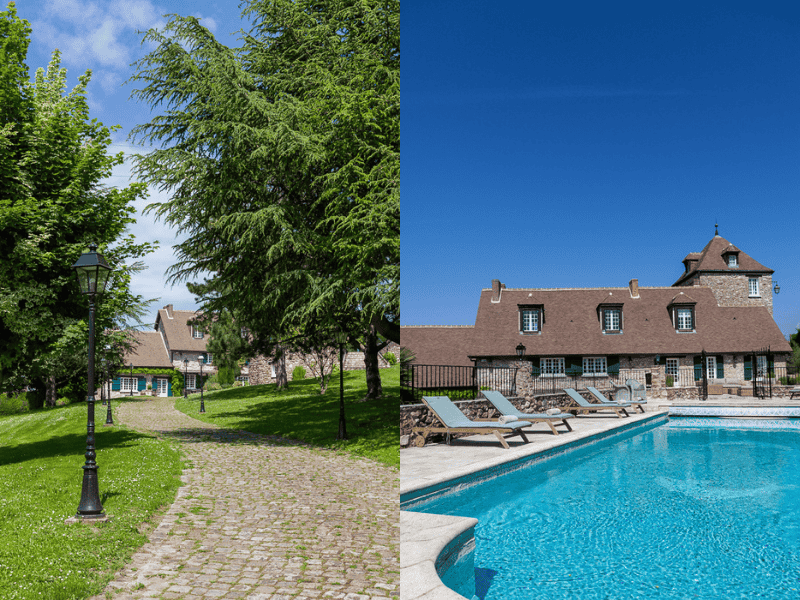
From Maison Vejoll, April’s vineyards are not backdrop but context. The leaves emerging on the nearest vine rows are the beginning of a process you now know more intimately — the Chardonnay reaching for the chalk, the Pinot Noir drawing structure from the cool hillside air, the Meunier unfurling its flour-dusted buds with the unhurried confidence of a variety that has weathered everything this marginal climate can offer.

Every glass of Champagne you open during your stay carries the fingerprints of these three varieties, and perhaps — in those rare, extraordinary cuvées from the most adventurous producers — a whisper of Arbane, or Petit Meslier, or the smoky depth of Enfumé. Understanding them does not diminish the magic. It deepens it.

This is Champagne’s quiet genius: that so much complexity, so much beauty, so much history can be expressed through the disciplined devotion to a handful of grapes, rooted in chalk, shaped by centuries, and poured — always — with joy.

 
Next
Next

March in Champagne: When Spring Awakens the Vineyards