La Rentrée in the Vines: An Earliest-Ever Harvest Unfolds in Champagne

 
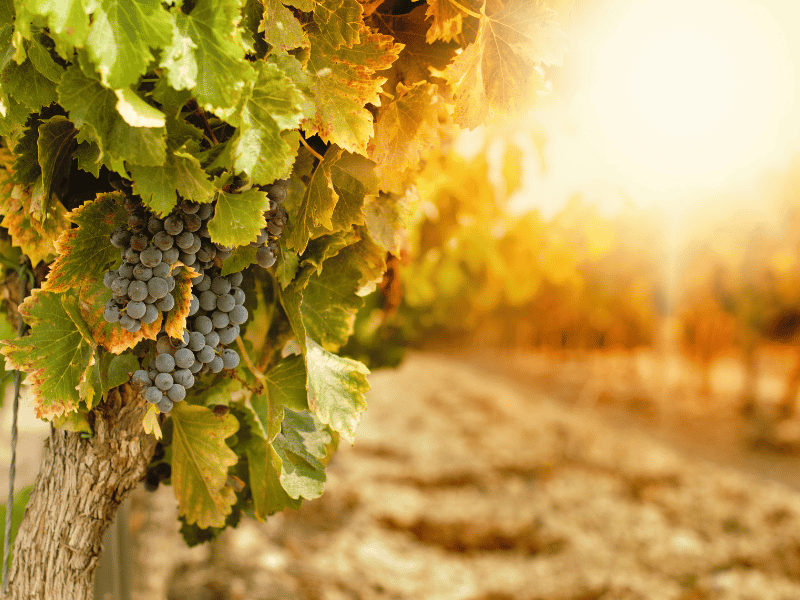
Sun haze over vineyards

There is a particular kind of quiet that settles over Champagne in September. The long, golden aperitif evenings of August begin to soften at the edges. Mornings arrive with a thin veil of mist over the vines. And somewhere between the last lazy aperitif on the terrace and the first cool evening that calls for a cardigan, the region undergoes its own version of the rentrée — that distinctly French return to rhythm and routine after the loosely structured pace of summer.

For most of France, la rentrée means schoolyards filling up again and Paris shaking off its August hush. In Champagne, the season's true marker has always been the vines rather than the calendar. And this year, that marker arrived earlier than almost anyone in the region can remember.


The Rentrée, Champagne Style

At Maison Vejoll, September has always felt like a gentle exhale after the intensity of high summer. The Avenue de Champagne empties of its peak-season crowds, the light turns a little more amber in the late afternoon, and the pace of a stay in Monthurel slows to something closer to its natural rhythm — long lunches on the terrace, unhurried walks through the vineyards, the sense of a landscape settling back into itself.

Street Sign Avenue de Champagne
Avenue de Champagne

Traditionally, this transitional mood coincided with one of the most anticipated moments in the Champenois calendar: the grape harvest, or les vendanges. For generations, the last days of August and the first weeks of September were when the vineyards came alive with pickers, when villages that spent the summer half-empty suddenly filled with seasonal workers, and when the entire region turned its attention to the vines.

This year, however, the story has a twist. By the time September begins, the harvest itself will already be behind us — a detail that says a great deal about just how unusual 2026 has been. Before we get to that, though, it's worth taking a moment to appreciate what the harvest actually involves, and why it remains one of the most fascinating traditions in all of French winemaking.


What "Les Vendanges" Actually Means

Sunset on vineyards
Man harvesting grappes

It's easy to romanticise the idea of the Champagne harvest without quite knowing what it entails. So here is the short version, drawn from what the winegrowers and tourism experts of the region describe.

Unlike in many wine regions, where mechanical harvesters can do much of the work, Champagne's grapes are picked entirely by hand. It's a rule of the appellation, not simply a matter of tradition: the grapes must arrive at the press whole and undamaged, since Champagne is famously a white wine made largely from black-skinned grapes, and any bruising or premature crushing would tint the juice. Care at this stage is everything.

The scale of the operation is genuinely impressive. Across the region, close to 120,000 people take part each year — pickers, porters, loaders, and press-house teams — all converging on the vineyards for a few intense weeks. It's often described as a moment of collective effervescence, when otherwise quiet villages fill with energy, conversation, and the particular camaraderie that comes from shared, physical, purposeful work.

Champagne's vineyards span three main areas, each with its own character. The Montagne de Reims, prized for Pinot Noir, contributes structure and power to the blend. South of Épernay, the chalky Côte des Blancs is Chardonnay country, lending elegance and finesse. And the Vallée de la Marne — home to Maison Vejoll and to Hautvillers, the village where Dom Pérignon himself once worked — is where Pinot Meunier shines, bringing a roundness and approachability that softens a blend beautifully.

Deciding exactly when to pick is its own quiet art. Committees of volunteer growers monitor test plots throughout the summer, tracking how each grape variety balances sugar and acidity as it ripens. Because ripening doesn't happen uniformly across the region, the start date can vary by as much as ten days from one village to the next. Once picking begins, it typically continues for one to three weeks, though in the Marne Valley — where Pinot Meunier tends to ripen more evenly — the entire harvest can sometimes be concentrated into a single, intense week.

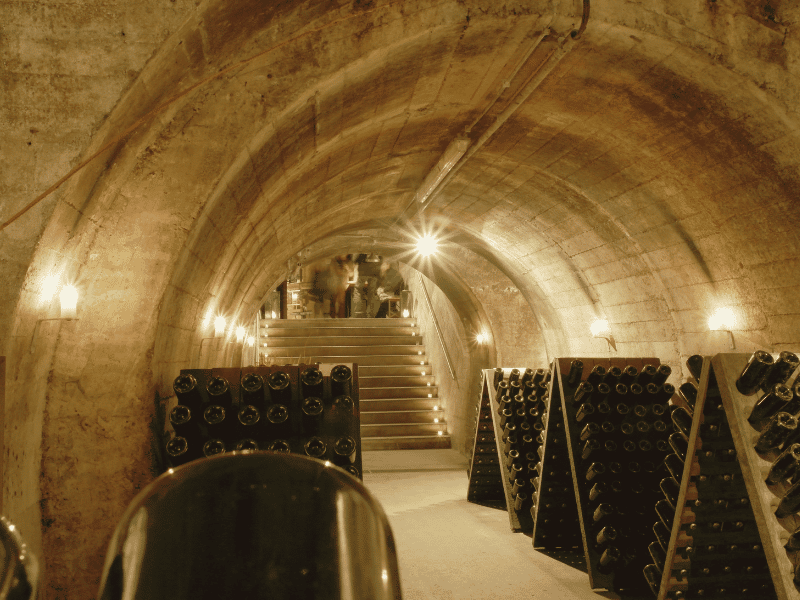
Champagne Cellar

What follows the picking is just as meticulous. The grapes are pressed gently and quickly to preserve their freshness. The following spring, cellar masters begin the delicate work of blending — combining different grape varieties, vineyard plots, and even different vintage years to create a consistent house style. Then comes the prise de mousse, the second fermentation that gives Champagne its signature bubbles, followed by a long, patient rest in the region's cool cellars: a minimum of fifteen months for non-vintage wines, three years or more for a vintage. Only then does a bottle go through riddling and disgorgement, ready at last to be enjoyed.

It's a process built on patience — which makes this year's abrupt departure from tradition all the more striking.

For a visitor, there's also a more hands-on way into all of this. Several growers around Épernay open their vineyards each year for "vendangeur d'un jour" experiences — a day spent as a grape picker, guided by the winegrower through each stage from picking to pressing, followed by a taste of freshly pressed grape juice, a glass of Champagne, and a small certificate to mark the occasion. It's the kind of immersive, slightly playful experience that turns an abstract idea of "the harvest" into something you've actually felt in your hands — the weight of a full basket, the particular snip of secateurs through a stem, the sticky-sweet smell of fresh juice in the press house. These experiences are typically booked directly with individual growers and estates, and given how compressed this year's picking window turned out to be, spots for 2026 filled and closed faster than usual — worth keeping in mind, and booking early, for a future harvest season.


This Year, Though...

Close up of a glass of Champagne

We've been following the trade press and grower accounts this August with real interest, and while it's still early days for firm conclusions, a consistent picture has emerged: 2026 has produced one of the earliest Champagne harvests ever recorded — by some accounts, the earliest in the appellation's documented history, surpassing even the previous record set in 2020.

Several well-known houses reportedly began picking in mid-August, with some vineyards starting even earlier than that. Growers have described the pace of ripening this year as unlike anything they've seen in decades, with the region's official pre-harvest monitoring network reportedly moving up its usual announcements by several days simply to keep up with how quickly the grapes were advancing.

What seems to have driven this is a combination of factors. A spring frost struck the region earlier in the year, reportedly reducing the number of fertile buds across large parts of the vineyard before the growing season had even properly begun. Then came a run of summer heatwaves — by some accounts, among the hottest and driest stretches the region has faced in years — which accelerated ripening dramatically. Winemakers have spoken about grapes reaching sugar levels usually associated with a much later point in the season, weeks ahead of schedule.

The result, according to what growers and cellar masters have shared with the trade press, is a smaller harvest than usual, but by most accounts, a remarkably healthy one. Some producers have gone so far as to describe the sanitary condition of this year's grapes as the best they've seen in decades — with dry conditions keeping disease and pest pressure unusually low. The trade-off, as several winemakers have noted, is concentration rather than sheer volume: smaller, more intensely flavoured berries, with less juice overall. The industry's collective response has been to set a lower yield cap for the year, a now-familiar adjustment as the region continues to navigate warmer, less predictable growing seasons.

The real test, as more than one cellar master has pointed out, won't be clear for some time yet. Warm-year Champagnes tend to show riper, more generous fruit, but the wines that make this region so distinctive rely on a delicate tension between ripeness and acidity. Whether the 2026 vintage manages to hold onto that signature freshness is something we'll likely be hearing much more about as the wines begin their long rest in the cellar. It's a story still being written — one shaped as much by the unpredictability of the weather as by generations of winemaking know-how.

For growers who have spent thirty years or more tending these vineyards, the sheer speed of this year's harvest has apparently prompted some reflection on just how much has changed. Where a start in mid-August was once treated as remarkable — the kind of thing that happened once in a generation, in an exceptional year like 2003 — several winemakers have suggested that it may simply become the region's new normal within the next couple of decades. It's a sobering thought alongside an otherwise celebratory one: the 2026 vintage, whatever else it turns out to be, will very likely be remembered as a marker of just how much the rhythm of this centuries-old tradition is shifting.


What It Means for a September Stay at Maison Vejoll

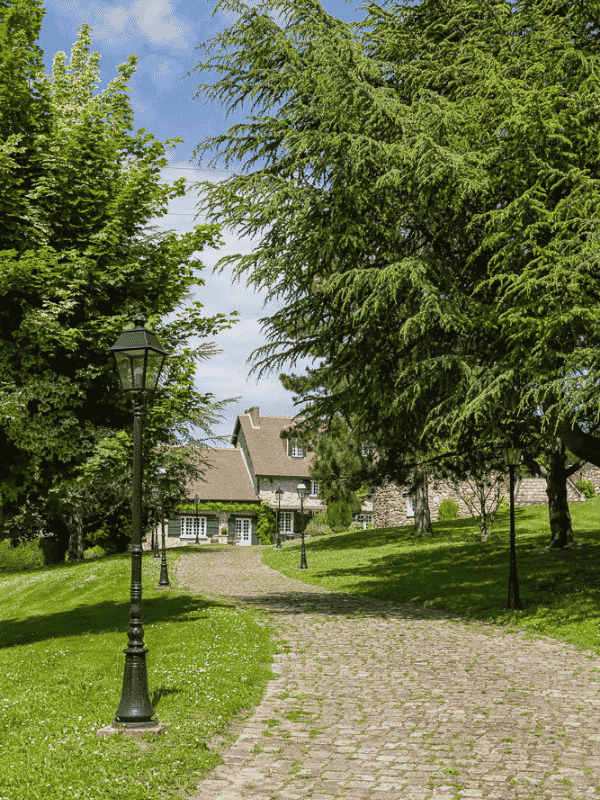
Maison Vejoll paved path entrance, Champagne France
Maison Vejoll Living Room, Champagne France

If you had pictured your September stay coinciding with the sight of pickers moving through the rows, secateurs in hand, we should be upfront: this year, that particular scene will already have wrapped up before the month even begins. It's a genuinely unusual quirk of the 2026 season, and one that speaks to just how remarkable — and how quickly it happened.

But that doesn't mean there's any less reason to visit. If anything, arriving in September this year means arriving in the immediate aftermath of a genuinely historic vintage — one that growers across the region will be talking about for years. The vines themselves remain a beautiful sight, their leaves beginning to turn as the season shifts, the rows a little emptier and quieter now that the pickers have moved on. And just out of sight, in the cellars of the region's houses and growers, the real work is only just beginning: pressing, the first stages of fermentation, and the early, hopeful conversations about what this unusual vintage might become.

September also brings its own calendar of things to do, harvest or no harvest. Running until the 27th of the month, the Vign'Art festival transforms the Champagne countryside into an open-air gallery, with eighteen contemporary and land art installations scattered across seventeen villages between Épernay, Reims, and the Marne Valley. Now in its seventh edition, the festival has a genuinely playful, site-specific spirit: sculptures built from old vine stocks standing sentinel over the rows, a circle of chairs and basins arranged in a village square to explore ideas of community, even a meerkat sculpture in Avize peering out over the vines with a pair of Champagne bottles standing in for binoculars. It's completely free, accessible at any hour, and makes for a wonderfully unexpected addition to a countryside walk or a slow drive through the vineyards — art quite literally rooted in the landscape that inspired it, and an easy way to see villages beyond the well-trodden Avenue de Champagne.

Later in the month, the weekend of the 18th to the 20th brings the European Heritage Days, when Épernay opens its doors a little wider than usual. Château Perrier, along with its Champagne cellars, offers free entry for the occasion — a rare chance to wander its collections and underground galleries without the usual ticket price — alongside flash guided tours, an escape game, and a family-friendly photo rally through the city's wine heritage.

Add to that the simple pleasures of the season — quieter roads than August, softer light for photographs, restaurant terraces that are easier to book, and the first hints of autumn produce beginning to appear on local menus — and September remains, harvest timing aside, one of the loveliest months to experience Champagne. The rhythm has simply shifted a little earlier this year. The welcome at Maison Vejoll has not.


A Few Questions We're Often Asked

Will I be able to see the grape harvest if I visit in September 2026? Not this year — by most accounts, picking was largely complete before the month began, making 2026 one of the earliest and shortest harvests the region has seen. The vines themselves remain well worth a visit, and the cellars are busy with pressing and fermentation just out of view.

Is there still plenty to do in the vineyards this September? Yes — the Vign'Art land art festival runs through the 27th, and the European Heritage Days weekend (18th–20th September) opens up Épernay's cellars and heritage sites, several of them for free.

How can I experience a future Champagne harvest myself? Several growers around Épernay offer "vendangeur d'un jour" experiences during picking season, letting visitors take part for a day. Given how compressed this year's window was, we'd recommend booking well ahead for future seasons — sometimes as early as several months in advance.


Maison Vejoll sits at the heart of the Champagne-Ardenne countryside, in the village of Monthurel — a quiet base from which to explore the vineyards, villages, and cellars of the Vallée de la Marne, in every season.

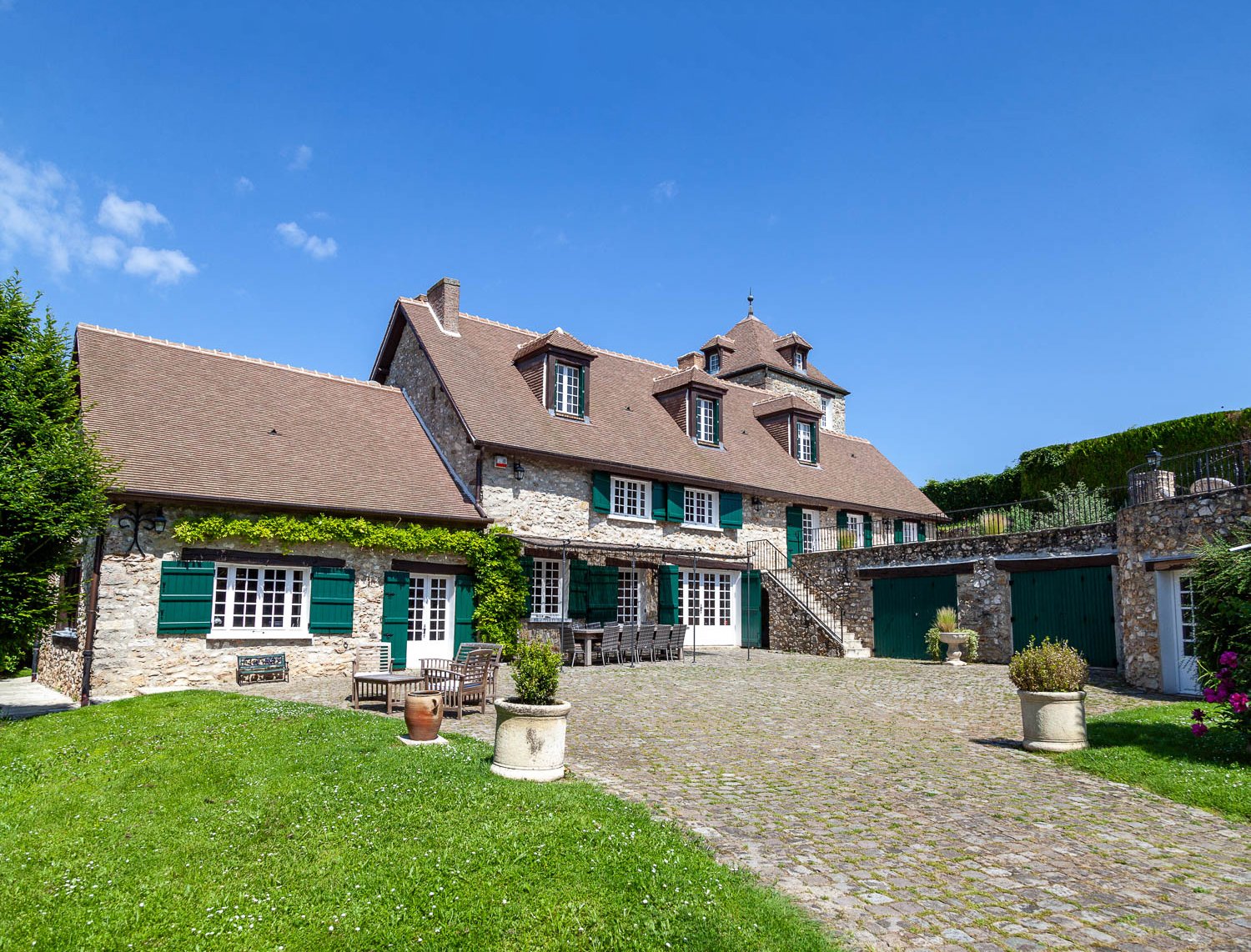
Facade of Maison Vejoll, Champagne France
 
Next
Next

Champagne on Ice: The Art of the Summer Aperitif